
Arbitrator Breached Duty to Act Fairly by Seeking an Opinion From a Third Party and Conducting his Own Research

The Commercial Court has remitted an award to the arbitrator for reconsideration on the basis of serious irregularity after the arbitrator sought the opinion of a third party and conducted his own research without notifying the parties.
Author(s): Richard Bamforth and Liz Williams
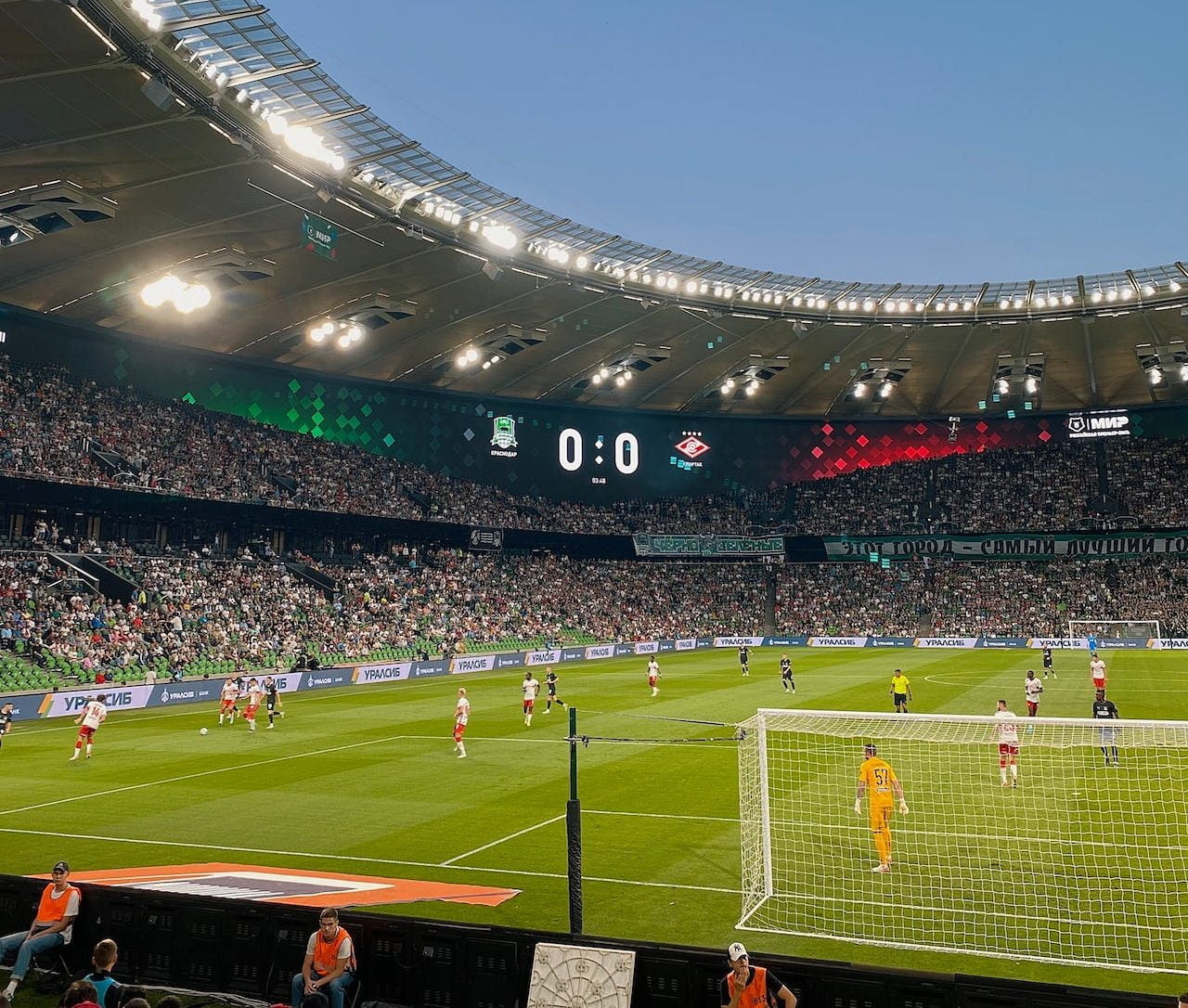
A wide-angle view of a soccer match in a large stadium packed with spectators. The scoreboard shows a 0-0 scoreline. Players are actively engaged on the field, with one team in red and white and the other in black and white. Bright stadium lights illuminate the scene.

Background

Fleetwood Wanderers Limited (t/a Fleetwood Town Football Club) v AFC Fylde Limited [2018] EWHC 3318 (Comm) concerned a dispute arising out of the transfer of a professional footballer. It was alleged that Fleetwood had procured a repudiatory breach of the player’s contract with Fylde. Fylde commenced an arbitration against Fleetwood under the Football Association Rules and FIFA’s Regulations on the Status and Transfer of Players (RSTP). A question arose as to whether the RSTP was binding in domestic disputes between clubs. The arbitrator sought the opinion of the FA’s judicial services manager on this issue before rendering his award. He neither notified the parties of this approach nor gave them any opportunity to make submissions on the opinion once it was received. Based partly on this opinion and on research he had carried out himself on the internet, the arbitrator found that Fleetwood was liable to pay compensation to Fylde. 

Fleetwood challenged the award under section 68(2)(a) of the Arbitration Act 1996 on the grounds that the arbitrator had failed to comply with his general duty under section 33(1) to “act fairly and impartially as between the parties, giving each party a reasonable opportunity of putting his case” and that this had caused substantial injustice to Fleetwood. 

A person balances a soccer ball on their forehead while standing in an outdoor area with palm trees. The individual wears a maroon shirt and has arms raised, focusing on the ball. The sky is clear, and the background features grass and a few structures.

The Court’s decision

Duty to act fairly and impartially

The court reiterated that an arbitral tribunal should give the parties an opportunity to make submissions on any issue that may be relied upon by it as the basis of its award. The parties are entitled to assume that the tribunal will base its decision solely on the evidence and arguments presented by them prior to the making of the award. The acts of the arbitrator in seeking an opinion from the FA and conducting his own research without notifying the parties constituted a breach of his general duty under section 33(1) and thus a serious irregularity under section 68(2)(a). 

Substantial injustice

The court followed the test in Alfred Uwe Maass v Musion Events Limited [2015] EWHC 1346: “there is substantial injustice if it can be shown that the irregularity in the procedure caused the arbitrators to reach a conclusion which, but for the irregularity, they might not have reached, as long as the alternative was reasonably arguable.” On the facts of this case, the court found that it was very likely that if the arbitrator had raised the question of obtaining a further opinion on the status of the RSTP, Fleetwood would have made further submissions, leading to a real prospect that the arbitrator would have concluded that the RSTP did not apply. 

A bronze statue of Lady Justice holding scales and a sword stands on a green table. A wooden gavel and block sit nearby. The background features bookshelves filled with books, adding a legal and scholarly atmosphere to the scene.

Setting aside versus remitting

Instead of setting aside the award, the court remitted it to the arbitrator for reconsideration, based on the following reasons: 

  1. Section 68(3) provides that the court must not set aside the award unless satisfied that it would be inappropriate to remit it to the arbitrator.
  2. Remitting the award for reconsideration of the part relating to the RSTP only would avoid reopening the rest of the award and thus save costs.
  3.  The irregularity, although material, was within a narrow compass. The parties would be able to make submissions and provide evidence on the questions raised by the arbitrator with the FA. 
  4. There was no suggestion of bias, nor any good reason to challenge the arbitrator’s professionalism. There was no reason to believe that if the award was remitted, this would compromise his future conduct of the reference.

Other resources you might like

If you found this article helpful and are interested in learning more, there is a wealth of other resources available on our website. We have a wide array of articles and guides on a variety of topics, each designed to provide you with a deeper understanding of the subject matter. We encourage you to explore these resources and deepen your knowledge.

A large conference room with a long table surrounded by tan swivel chairs. The room, often used for commercial rent lease dispute mediations, has a high ceiling with recessed lighting and a projector. Floor-to-ceiling windows provide a view of an outdoor landscape. Laptops and office supplies are on the table.

Rent relief in the COVID-19 lockdown

For those who have commercial leases, there are questions around whether there is a right for tenants to ask for rent relief and if so, what that relief should look like.

A commonly used form of commercial lease is the Auckland District Law Society lease, which has been in use since 2010. That lease (in clause 27.5) makes provision for rent reduction, where the tenant is unable to gain access to the leased premises because of an emergency situation, such as the COVID-19 lockdown. In such cases, a fair proportion of the rent and outgoings cease to be payable.
Night view of Brooklyn Bridge with illuminated skyscrapers of Manhattan in the background reflecting in the East River, New York City. The scene features a mix of modern and historic architecture under a clear night sky.

What are the implications of becoming a contracting state to the New York convention?

A distant view of an industrial facility with tall structures, cylindrical tanks, and smokestacks, partially obscured by lush green leaves and branches in the foreground. The sky is bright with scattered clouds.

Leave for second appeal declined in lease dispute arbitration

In The Gama Foundation v Fletcher Steel Limited [2023] NZCA 243, the Court of Appeal reiterated the strict New Zealand tests set out in Gold and Resource Developments (NZ) Ltd v Doug Hood Ltd [2000] 3 NZLR 318 (CA) and Downer Construction (New Zealand) Ltd v Silverfield Developments Ltd [2008] 2 NZLR 591 for appellate intervention into arbitral awards and the requirement to set aside an award on public policy grounds

Get in touch

Contact our team today to see how we can help

Contact us

This field is for validation purposes and should be left unchanged.